What Is Mohs Surgery? A Guide for Patients
- SID

- Apr 8
- 3 min read
If you or someone you love has been diagnosed with skin cancer, you may have heard the term "Mohs surgery". For many patients, the word "surgery" can feel intimidating, especially when the diagnosis itself is already a lot to process. The good news is that Mohs surgery is one of the most effective, precise, and well-studied treatments available for certain types of skin cancer and understanding what it involves can go a long way toward easing any anxiety about the procedure.
Here is a straightforward, comprehensive look at what Mohs surgery is, how it works, and what you can expect if it is recommended for you.
A Brief History
Mohs surgery is named after Dr. Frederic Mohs, who developed the technique in the 1930s at the University of Wisconsin. Over the following decades, the procedure was refined and modernized, and today it is considered the gold standard treatment for the most common types of skin cancer. It is performed by fellowship-trained Mohs surgeons, dermatologists who have completed specialized training in both the surgical and pathological aspects of the procedure.
What Is Mohs Surgery?
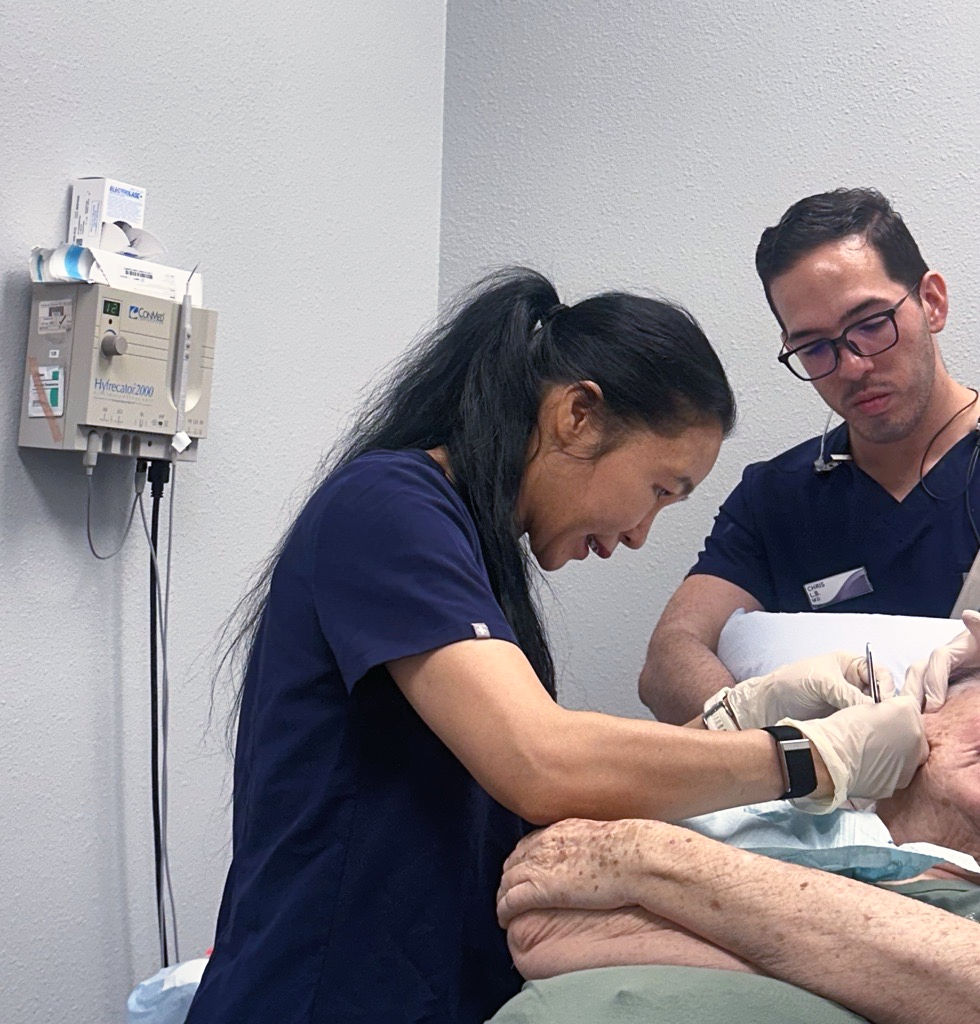
Mohs surgery is a specialized surgical technique used to remove skin cancer layer by layer while simultaneously examining each layer under a microscope in real time. Unlike traditional excision, where a surgeon removes a margin of tissue and sends it to an outside laboratory for analysis (a process that can take days), Mohs surgery allows the operating surgeon to also serve as the pathologist, examining the tissue immediately on-site and continuing to remove only what is necessary until no cancer cells remain.
This precision is what sets Mohs surgery apart. The goal is to remove every cancer cell while sparing as much healthy surrounding tissue as possible, a balance that is especially important when a tumor is located on the face or another cosmetically or functionally sensitive area.
Why Is Mohs Surgery Considered the Gold Standard?
Mohs surgery has earned its reputation through decades of consistently exceptional outcomes. Several factors contribute to why it is so highly regarded:
Unmatched cure rates. Mohs surgery achieves cure rates of up to 99% for primary (previously untreated) skin cancers and up to 94% for recurrent cases, the highest of any treatment approach for the cancers it is used to treat.
Maximum tissue conservation. Because the procedure examines 100% of the tissue margins in real time, rather than a statistical sampling, it is able to target cancer with remarkable precision. This is critically important in areas like the nose, eyelids, ears, and lips, where preserving healthy tissue directly affects both appearance and function.
Same-day results. Patients know on the day of their procedure whether their cancer has been completely removed. There is no waiting for a laboratory report to come back days later.
Reduced risk of recurrence. The thoroughness of the margin examination means that microscopic extensions of the tumor, which can be missed by other techniques, are identified and removed during the procedure itself.
What Conditions Is Mohs Surgery Used to Treat?
Mohs surgery is primarily used for:
Basal cell carcinoma (BCC) — especially in high-risk locations, large tumors, or cases where the tumor has recurred after previous treatment
Squamous cell carcinoma (SCC) — particularly aggressive or recurrent forms, or those located in high-risk areas
Certain other rare skin cancers, as determined by your dermatologist
It is most commonly recommended when a tumor is located in a cosmetically or functionally sensitive area, when the tumor has ill-defined borders, when it has recurred after prior treatment, or when the patient is immunocompromised.
What Should You Expect on the Day of Surgery?
Plan to spend most of the day at the office, even though the actual procedure time is intermittent. Our guess is that you will be in our office anywhere from 2 to 4.5 hours. Bring a book, a podcast, or something to keep you comfortable during the waiting periods between stages. You will be awake throughout the procedure and able to eat and drink normally beforehand unless instructed otherwise.
Most patients experience only mild discomfort, which is well-managed with local anesthetic. You will be given detailed wound care instructions afterward, and the majority of patients return to normal activities within a day or two, though specific recovery guidance depends on the location and extent of your procedure.
Is Mohs Surgery Right for You?
At Specialists in Dermatology, our team is here to walk you through your diagnosis, explain all of your treatment options, and help you feel informed and confident every step of the way. If you have questions about Mohs surgery or have been referred for a consultation, we encourage you to reach out, because understanding your treatment is an important part of your care.
Please call us at (520) 382 - 3330 if you have any further questions, we are here for you every step of the way.